
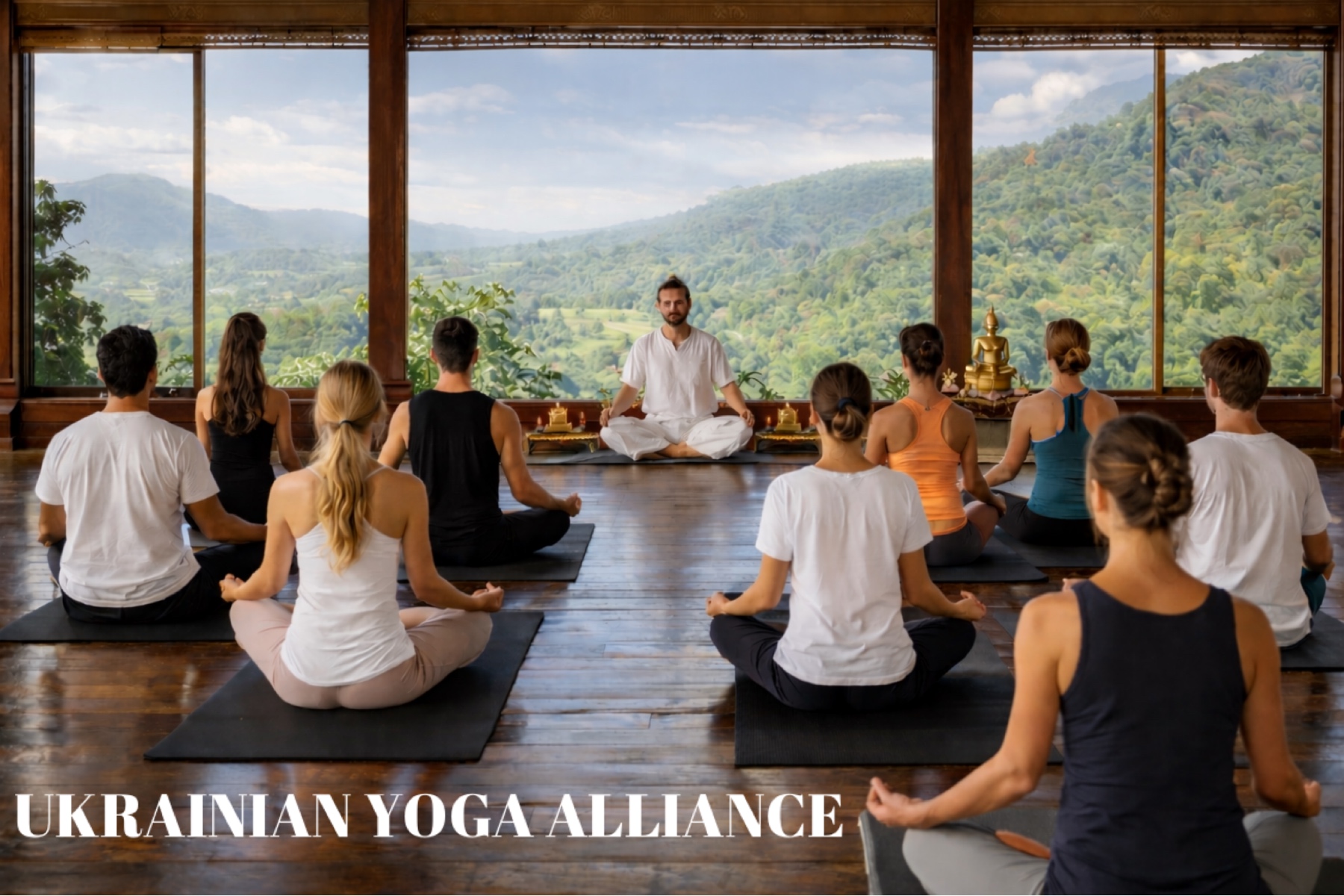
SATKRIYAS AND SHATKARMAS
You can read more about the Yoga Instructor Course on the course website:
kurspoyoge.com
Course registration:
📞 Phone: +380984777777
(Viber / Telegram / WhatsApp)
Yoga Alliance website:
yogaalliance.com.ua
Cleansing Techniques as the Foundation of Yoga Teacher Training
In classical yoga, body cleansing is regarded as an essential foundation of practice, alongside asanas, pranayama, and meditation.
Without regular cleansing, it is impossible to fully раскрыть the potential of yogic techniques or prepare the body and mind for higher levels of practice.
For this reason, in professional yoga teacher training programs, satkriyas and shatkarmas are studied systematically and in depth, with mandatory understanding of their physiological and energetic mechanisms of action.
Why Cleansing Is Essential for a Future Yoga Teacher
Yoga views the human being as a single integrated system, where the condition of the body directly influences breathing, the nervous system, emotional balance, and the level of awareness.
When the body is overloaded with toxins, tense, or imbalanced:
•breathing becomes shallow;
•energy moves chaotically;
•the mind loses stability;
•practice ceases to be deep and safe.
Regular cleansing techniques:
•prepare the body for asana and pranayama;
•normalize the functioning of the respiratory and digestive systems;
•stabilize the nervous system;
•improve concentration and mental clarity;
•cultivate physical and mental discipline in the yoga teacher.
Shatkarmas — The Six Cleansing Methods of Yoga
Shatkarmas (shatkriyas) are a classical system of six cleansing techniques described in traditional hatha yoga texts.
In yoga teacher training, they are not treated as isolated practices but as a unified system for preparing the body and mind.
The main shatkarmas include:
1.Jala Neti — cleansing of the nasal passages with saline water
2.Basti — cleansing and activation of the pelvic floor area
3.Agnisara — stimulation and cleansing of the digestive tract
4.Nauli — massage of the abdominal organs
5.Trataka — cleansing of visual and nervous pathways
6.Kapalabhati — cleansing of the respiratory system and areas of the brain
Each of these techniques has clear indications, contraindications, and execution methods, knowledge of which is essential for a professional yoga instructor.
Jala Neti — Cleansing of the Respiratory Pathways
Jala Neti is a fundamental and highly accessible yogic cleansing practice aimed at washing the nasal passages with saline water.
Technique
•1 teaspoon of rock salt (level, without a heap)
•500 ml of warm water
•a special neti pot or nasal cleansing bottle
250 ml of water is passed through each nostril.
The head is tilted forward, the mouth remains open, and breathing is performed through the mouth.
When the vessel is positioned correctly and the head angle is appropriate, water flows freely into one nostril and out through the other.
After completion, it is recommended to perform intensive breathing (kapalabhati) in a deep forward bend to remove any remaining water.
Benefits of the Practice
•prevention of colds and respiratory illnesses;
•cleansing of the nasal passages from mucus and microorganisms;
•stimulation of nerve endings in the nasal cavity;
•improved brain function and concentration;
•indirect stimulation of the ajna center.
Contraindications
•chronic nosebleeds;
•severe deviation of the nasal septum;
•acute inflammatory conditions of the nasopharynx.
Basti Kriya — Working with the Pelvic Floor and Mula Bandha
In modern yoga teacher training, Basti Kriya is most commonly practiced through conscious work with Mula Bandha, the lower energetic lock.
Essence of the Practice
Mula Bandha is not merely a physical contraction of the perineal muscles.
It is a psychophysical technique that affects:
•the sensorimotor and autonomic nervous system of the pelvic region;
•the flow of apana;
•psycho-emotional stability.
Through conscious contraction and retention, an effect of directing energy upward is created, forming the foundation for more subtle yogic practices.
Technique
The practice is performed in Siddhasana:
•the heel of one foot gently presses the perineal area;
•the other heel rests near the pubic bone;
•the spine is elongated, and attention is directed inward.
The point of physical contraction differs:
•for men — the area between the anus and the scrotum;
•for women — the area of the vaginal vestibule.
The contraction is performed consciously, without excessive tension, with attention focused on the muladhara center.
Effects of the Practice
•strengthening of the pelvic organs;
•normalization of digestive and reproductive functions;
•stabilization of the nervous system;
•development of inner stability and composure;
•deep psycho-emotional relaxation.
Contraindications
•heart diseases;
•high blood pressure or increased intracranial pressure;
•dizziness;
•menstruation and amenorrhea;
•pregnancy or risk of miscarriage.
The Role of Shatkarmas in Professional Yoga Teacher Training
A yoga teacher bears responsibility not only for their own practice but also for the health and safety of their students.
Therefore, knowledge of shatkarmas includes:
•understanding of physiology and energetics;
•the ability to explain techniques correctly;
•the capacity to recognize contraindications;
•adherence to safety principles.
Shatkarmas cultivate awareness, discipline, and depth of perception, without which it is impossible to become a professional yoga instructor.
Shatkarmas as the Foundation of a Mature Yogic Practice
Body cleansing is not an auxiliary element but a necessary stage of the yogic path.
Through satkriyas, the body becomes a conduit rather than an obstacle, the mind becomes stable, and practice becomes deep and safe.
For this reason, the study of shatkarmas is an essential part of yoga teacher training programs, forming a solid foundation for further professional growth.
Within yoga instructor training courses, the chakra system is studied in a comprehensive and practice-oriented manner.
The training includes:
•the theory of human energetic anatomy,
•the connection between chakras, the body, breathing, and the psyche,
•practical application through asanas and pranayama,
•teaching methodology that takes energetic centers into account,
•the development of the instructor’s personal experiential understanding.
This approach enables graduates to:
•confidently lead group and individual classes,
•deeply understand students’ internal processes,
•teach yoga as a holistic and integrated system.
Who the Yoga Instructor Training Courses Are For
Yoga instructor training courses are designed for:
•yoga practitioners who want to become teachers,
•instructors seeking to upgrade their qualifications,
•anyone wishing to gain a deeper understanding of yoga and human energetics.
Training is conducted in the following formats:
•online and offline,
•with a step-by-step educational structure,
•with official certification.
Enroll in Yoga Instructor Training
If you want to:
•gain a deep understanding of yoga,
•master energetic anatomy and the chakra system,
•become a professional yoga instructor,
yoga instructor training courses will become the foundation of your professional and personal growth.
Enroll now and begin your journey toward a new profession.
“Yoga. Gold Standard” Course
The “Yoga. Gold Standard” course is a systematic professional training program for yoga instructors based on classical standards.
From the very first classes, you will feel qualitative changes in your practice and gain a solid knowledge base that will support many years of personal development and teaching.
Professional Standards of Instructor Training
The Ukrainian Yoga Alliance is the largest non-profit organization that establishes and maintains yoga teaching standards in Ukraine.
The main areas of activity of the Alliance include:
•uniting the professional yoga community,
•developing and approving qualification requirements,
•official certification of yoga instructors,
•maintaining the Unified Register of Certified Yoga Teachers.
Training Format and Examination
Within online yoga instructor training courses, students of the Yoga Alliance School undergo mandatory practical and theoretical assessment.
Passing Surya Namaskar is part of the examination process.
A video of the exam, conducted within online courses, is available via the link — click to watch.
You can watch a full video overview of the online course by the Head of the Yoga Alliance, Vladimir Bondarenko, on our YouTube channel by following the link.
Training Locations and Tuition Fees
Yoga Alliance School branches have resumed operations in the following cities:
•Kyiv
•Warsaw (Poland)
•Kharkiv
•Dnipro
•Odesa
•Lviv
•Constanța (Romania)
These branches offer continuously running offline yoga instructor training courses led by senior instructors of the Alliance.
Tuition fees:
•online course — 15,500 UAH
•offline course — 17,500 UAH
Since August 2022, instructors who successfully pass examinations with distinction receive the right to train future yoga instructors on behalf of the Yoga Alliance and conduct teacher training courses jointly with the Organization.
Such instructors receive the status of Senior Instructor of the Yoga Alliance and earn 50% of the course fee for each student.
For full details, contact us via Viber / Telegram / WhatsApp:
+380984777777
Training Results
After completing the one-month course and successfully passing the exams, you will:
•receive two international Yoga Alliance certificates registered with the Ministry of Justice of Ukraine;
•obtain the right to teach yoga in more than 100 countries worldwide;
•master a well-structured class format including kriyas, pranayama, and meditation;
•receive lifetime access to video lessons, an application for learning posture names, and 12 balanced printed lesson plans for the first year of teaching;
•receive the “Gold Standard” methodological guide — a detailed manual on asanas, chakras, mudras, bandhas, and key techniques of classical yoga.
Additional Materials
Contacts and Registration
You can read more about the Yoga Instructor Course on the course website:
Course registration:
📞 Phone: +380984777777
(Viber / Telegram / WhatsApp)
Yoga Alliance website:
Оставить комментарий